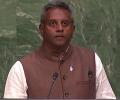
Salil Shetty, secretary-general of the Amnesty International, created quite a buzz at the United Nations on Friday with his hard-hitting speech during the Sustainable Development Summit 2015.

Finance Minister Nirmala Sitharaman's Budget proposals lay out a comprehensive road map for transforming India into a developed nation, focusing on key priorities that aim to generate ample opportunities for all citizens in "Viksit Bharat". It sets the stage for sustained economic growth, social development, and technological advancement.

India's economy is likely to grow by 6.5 per cent in the current and the next financial year, an EY report said, attributing lower than anticipated expansion in the September quarter to fall in private consumption expenditure and gross fixed capital formation. Real GDP growth eased to a seven-quarter low of 5.4 per cent in July-September -- the second quarter of the current 2024-25 fiscal year.
"The new structure will substantially reduce taxes on the middle class and leave more money in their hands, boosting household consumption, savings and investment," Sitharaman said presenting what was dubbed as 'reformist' budget for the next fiscal in Lok Sabha.

'...We should first look at and acknowledge what we have done to ourselves.' 'To not do so opens us to the accusation of rank hypocrisy and also reduces the stature of our globetrotting peaceniks,' asserts Aakar Patel.

Bihar, Jharkhand and Uttar Pradesh have emerged as the poorest states in India, according to Niti Aayog's first Multidimensional Poverty Index (MPI) report. As per the index, 51.91 per cent population of Bihar is poor, followed 42.16 per cent in Jharkhand, 37.79 per cent in Uttar Pradesh. While Madhya Pradesh (36.65 per cent) has been placed fourth in the index, Meghalaya (32.67 per cent) is at the fifth spot. Kerala (0.71 per cent), Goa (3.76 per cent), Sikkim (3.82 per cent), Tamil Nadu (4.89 per cent) and Punjab (5.59 per cent) have registered the lowest poverty across India and are at the bottom of the index.

Prime Minister Narendra Modi on Tuesday met Microsoft co-founder and billionaire philanthropist Bill Gates on the sidelines of the climate summit here and discussed ways to further sustainable development, steps to mitigate climate change and vaccine research. The meeting between Modi and the American business magnate, whose foundation is focusing on fighting the COVID-19 pandemic, took place after the former launched the Initiative for the Resilient Island States (IRIS) for developing infrastructure of small island nations. Prime Minister Modi expressed appreciation for the work being done by the Bill and Melinda Gates Foundation in India, the Ministry of External Affairs (MEA) said in a statement.

Social integration with inclusion is is most necessary.
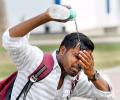
Heatwaves claimed more than 17,000 lives in 50 years in India, according to a paper authored by M Rajeevan, former secretary of Ministry of Earth Sciences, along with scientists Kamaljit Ray, S S Ray, R K Giri and A P Dimri.
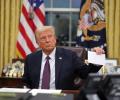
It would be a challenge to India's policy makers how to deal with Trump so that mutual economic growth remains sustained and mutual understanding on global issues are not hampered, observes Dr Rajaram Panda.

'Now is the time for the richer industrialised countries to show that they too are willing to move decisively along this path'
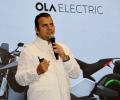
Why has the shift from ICE to electric slowed down despite initial enthusiasm?

An Indian parliamentary delegation, led by Lok Sabha Speaker Sumitra Mahajan, dissociated itself from the 'Bali Declaration'.
However, the country is facing a tremendous challenge in sustaining drinking water security in rural areas.

Apart from the human body, human food will bear direct repercussions. From staples such as wheat, to coffee, dairy, and even the great Hilsa face the threat of reduced supply due to the extreme heat.

Extreme poverty in India declined by 38 million in 2021 to 167.49 million after a surge in the two preceding years, but remained above the 2018 level, the latest World Bank data shows. While for most countries poverty rose in 2020, when the Covid-19 pandemic hit the global economy, the data shows poverty shot up in India a year earlier in 2019 to 176.09 million from 151.79 million in 2018, the lowest pre-pandemic count. India's poverty rate at 11.9 per cent in 2021 also remained higher than the 2018 level of 11.09 per cent, though easing from 14.72 per cent in 2020.

On the occasion, a panel discussion will be organised on 'Combating inequalities for the achievement of SDGs'.
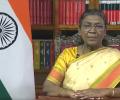
President Droupadi Murmu, in her address to the nation on Republic Day, advocated for the "One Nation One Election" initiative, emphasizing its potential to enhance governance and reduce financial burdens. She highlighted the government's efforts to eliminate remnants of colonialism, citing the replacement of British-era criminal laws with modern alternatives. Murmu also lauded India's economic progress, stressing the importance of inclusive growth and social welfare. She urged citizens to remember the sacrifices of freedom fighters and reaffirmed the significance of the Constitution in guiding India's journey towards a prosperous and equitable future.

In the document, Russia underlined that it will build on a privileged strategic partnership with India with a view to enhance and expand cooperation in all areas on a mutually beneficial basis.

Referring to the COVID-19 pandemic, Modi said India has always prided itself as the first responder in the region - a friend in need.
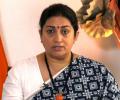
Irani said the "Government of India took a series of measures for ensuring safety, security and well-being of women during the COVID-19 pandemic."

Climate and sustainable development financing, multilateral institution reforms, regulation of digital assets, the spillover effect on developing economies from actions of western central banks, energy and food security in the backdrop of war in Europe, and sanctions on Russia and their impact on the global economy are some of the agenda items that India will take up as President of G-20, Finance Minister Nirmala Sitharaman said on Tuesday. India will take over as President of the powerful international grouping on December 1 for a year. There will be around 200 meetings throughout the country, with the summit Heads of State meeting expected to be held in New Delhi next September.
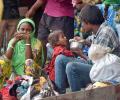
The number of poor people in India fell by about 415 million between 2005-06 and 2019-21, a "historic change" and a demonstration that the Sustainable Development Goal target of reducing at least by half the proportion of men, women and children of all ages living in poverty by 2030 is possible to achieve, even at a large scale, according to the UN.
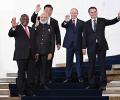
Chinese President Xi Jinping will attend the 13th BRICS summit to be held on Thursday at the invitation of Prime Minister Narendra Modi, China's foreign ministry announced in Beijing on Wednesday.
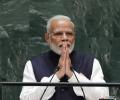
The sources said Modi's pre-recorded video statement is expected to be broadcast at the UN General Assembly hall in New York around 9 am local time (6.30 pm IST) and added that he is scheduled as the first speaker in the forenoon.
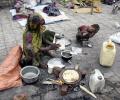
India has halved incidence of poverty from 1990s

There has been a significant increase of 50 per cent in global wealth between 1990 and 2010, but it rose by only an "anaemic" 6 per cent during this period if measured in terms of sustainable development.

Considering factors like job prospects, growth potential and industry trends can provide valuable insights into selecting a suitable career path, suggests rediffGURU Rohit Gupta.

15 to 25 per cent of property registrations in Mumbai come from redevelopment, with over 3,500 projects approved by May 2024.

In his opening remarks at the virtual summit of Leaders of G20 countries, Modi made it clear that terrorism was "unacceptable" to everyone and the death of civilians, anywhere, was condemnable.

'Tensions and dialogue are likely to go hand-in-hand with China.' 'The goal should be to cultivate power so that one can negotiate from a position of strength.'

External Affairs Minister S Jaishankar on Wednesday held wide-ranging talks with his Russian counterpart Sergey Lavrov focusing on the Ukraine conflict, bilateral ties and issues relating to the G20 foreign ministers' meeting.

Ron Somers, founder and CEO of India First Group and the former President of leading business advocacy group US-India Business Council said that when Lok Sabha election results are declared on June 4, "I believe that Narendra Modi will win Parliament by the largest majority ever recorded in the country's history.
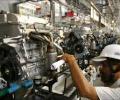
India's youth has to be both educated and employable.

China also had the largest illicit outflows of any country in 2013.

Digital literacy is emerging as the professional language of 2024. It is the ability to process complex data sets, deploy critical communication technologies appropriately and validate your importance at your workplace, explains Jagdeep Kochar, managing director, Baker & Taylor India.
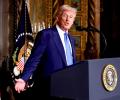
The US is currently Earth's most powerful country and a certain latitude of understanding -- a world view -- is popularly expected from its leadership. From a country identified with freedom, constitution, debate, democracy and the likes of Abraham Lincoln even as it had the most powerful military around, the US, following Trump's actions, seemed repositioned as militarily powerful with other qualities secondary, observes Shyam G Menon.
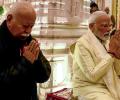
Much drama is likely to continue in the coming year, within the Sangh Parivar as well as involving the Opposition parties and, of course the BJP's allies, predicts Modi biographer Nilanjan Mukhopadhyay.
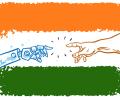
Having marked a 20-year milestone in India, global tech giant Google is upbeat about its next innings here with Artificial Intelligence (AI) playing a big role in it, India MD Roma Datta Chobey said on Thursday, adding that the company is aligning its vision and strategy fully to the country's growth and ambitions. In an interview to PTI, Chobey said Google believes that AI should be regulated but in a way that strikes a fine balance between user benefit -- which is "still at a nascent stage" -- and at the same time, fosters innovation.
 © 2026 Rediff.com - Advertise with us - Disclaimer - Privacy Policy - Sitemap - Feedback - About us - Terms of use - Grievances